November 23, 2026
Preserved Moss Types Compared for Color, Texture, and Durability
By @theindoorgrove
Choosing the right preserved moss for your wall display
When you plan a living wall that requires no watering or sunlight, preserved moss is the material that makes it possible. Unlike dried moss, preserved moss has been treated with a glycerin-based solution that replaces the natural moisture and keeps the plant soft and flexible for years. The result is a stable, low-maintenance surface that holds its appearance with minimal care. But not all preserved moss looks or behaves the same. The main types available for interior displays each bring a distinct color palette, surface texture, and longevity profile. Understanding these differences helps you select the moss that suits the look you want and the conditions of the room where it will hang.
Sheet moss, the even, carpet-like option
Sheet moss grows in flat, continuous mats that lie close to the substrate. Its appearance is uniform, with a dense nap of tiny leaves that create a soft, velvety surface. The color of sheet moss tends toward deep forest green, though preserved versions can also be found in lighter shades of olive or emerald. Because the moss grows in one plane, it covers large areas without visible gaps, making it a natural choice for backgrounds or for filling rectangular panels.
In terms of texture, sheet moss feels plush and consistent. It does not have the bumpy, three-dimensional quality of some other forms. This flatness works well when you want the moss to serve as a quiet backdrop for other elements such as wood frames or accent pieces. The durability of sheet moss is good under normal indoor conditions. It holds its color for several years if kept out of direct sunlight and away from heating vents. Direct light will fade the green tones faster, and dry air can make the surface feel brittle over time. But with reasonable care, a sheet moss panel remains attractive for three to five years before the color begins to shift.
Cushion moss, texture and depth
Cushion moss grows in rounded, dome-like clumps that rise above the surface. When preserved and mounted, it creates a landscape of soft, pillowy mounds that catch light and shadow differently across the panel. The texture is noticeably rougher than sheet moss, with a bumpy, irregular feel that adds tactile interest. Colors range from bright lime green to deeper emerald, and some preserved cushion moss includes subtle variations within the same clump, which gives the display a more organic look.
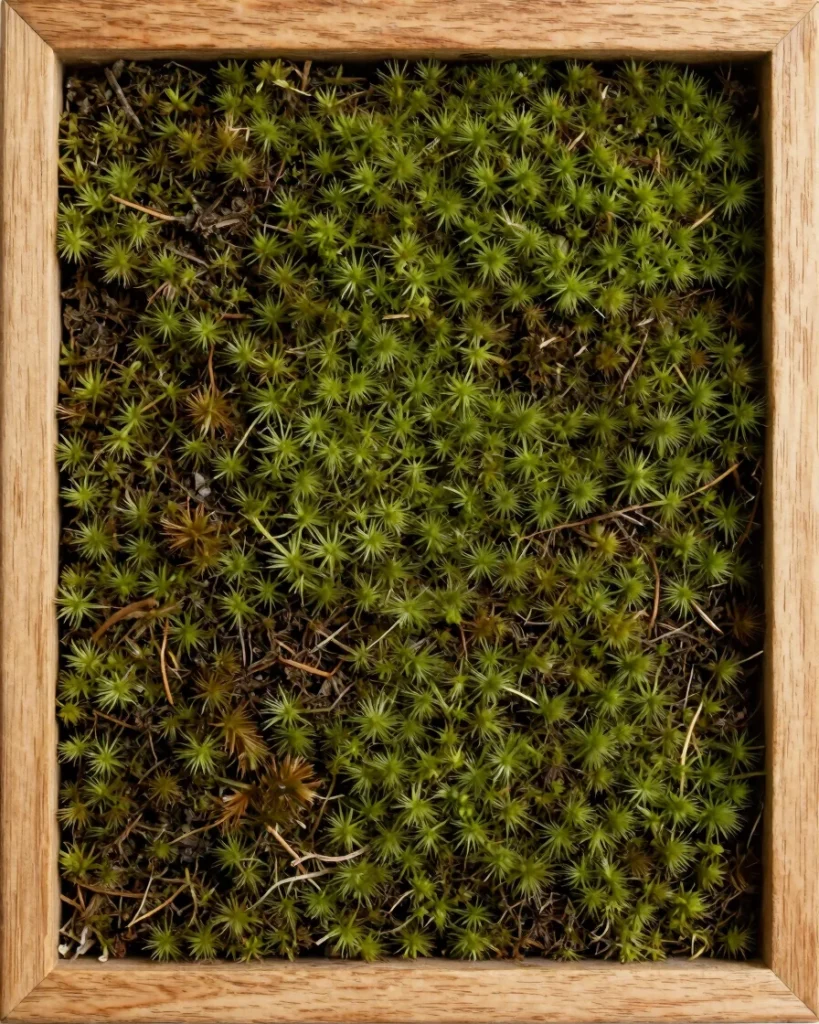
The trade-off with cushion moss is that the raised shapes create gaps between the clumps. These gaps must be filled or covered during installation, or they will show the backing material beneath. This makes cushion moss slightly more labor-intensive to mount than sheet moss, but the visual reward is a surface that looks less manufactured and more like a natural forest floor. For a moss wall art piece that aims to mimic a wild landscape, cushion moss is a strong choice. Its durability is similar to sheet moss, though the raised portions can become dusty more easily and may require a gentle brush or compressed air to clean. The color retention is good as long as the panel is not exposed to strong light for long periods.
Reindeer moss, the light, airy accent
Reindeer moss is not a true moss but a lichen. It grows in branching, coral-like structures that stand upright and create an open, airy texture. When preserved, it feels dry and slightly spongy to the touch. The natural color is a pale grey-green, but preserved reindeer moss is often dyed in a wide range of colors, including bright greens, blues, yellows, and even pinks or oranges. This makes it a popular choice for designers who want a pop of color or a modern, stylized look.
The texture of reindeer moss is completely different from the two true mosses. It is not soft or velvety; it is crisp and springy, with a structure that holds its shape even when pressed. This resilience makes it useful for filling spaces between other mosses or for creating accents on a panel. Because reindeer moss is lightweight and does not compact, it adds volume without adding much weight. Its durability is excellent. The dyed colors can remain vibrant for several years if the panel is kept out of direct sunlight, which would cause fading. The lichen itself does not degrade quickly, so a reindeer moss accent can outlast the true mosses around it. However, the dry texture means it does not contribute to the soft, cushion-like feel that some people expect from a moss wall.
How to choose based on the room and display style
The best type of preserved moss for your project depends on where the panel will hang and what mood you want to create. For a calm, uniform background in a bedroom or hallway, sheet moss provides a smooth, restful surface that does not compete with other decor. Its even color and soft texture make it a safe choice for large areas, and it pairs well with a wood frame that adds warmth.
If the panel is meant to be a focal point in a living room or office, cushion moss offers more visual interest. The play of light across the mounds gives the piece a sense of movement, and the uneven surface draws the eye. Cushion moss works especially well in a shadow-box frame where the depth can be appreciated. The gaps between clumps can be filled with reindeer moss or small stones to create a miniature landscape.
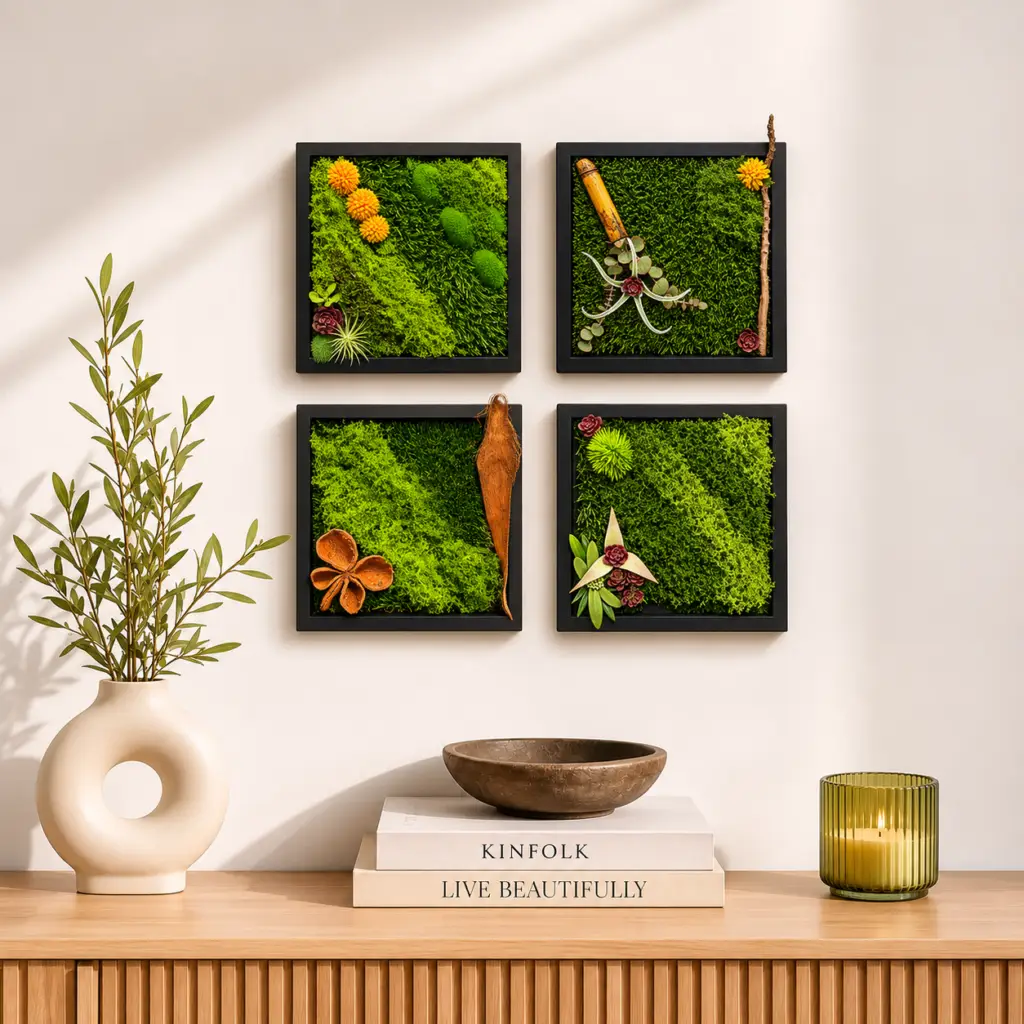
Reindeer moss is best used as an accent rather than the main material. Its bright colors and open structure can liven up a panel that might otherwise look too dark or dense. In a modern interior with clean lines, a panel that combines sheet moss as a base with reindeer moss accents in a contrasting color can look striking. The key is to balance the textures so that one does not overwhelm the other.
Durability and maintenance across types
All preserved mosses share a common requirement: they must be kept away from moisture. Preserved moss has been treated to hold its shape without water, but if it gets wet, the glycerin solution can wash out, and the moss can rot or grow mold. This makes preserved moss unsuitable for bathrooms or kitchens where steam is common. For the same reason, the panel should never be misted or cleaned with a wet cloth.
Dust accumulation is the main maintenance concern. Sheet moss, with its flat surface, collects dust evenly and can be cleaned with a soft brush or a hairdryer on a cool, low setting. Cushion moss traps dust in the crevices between clumps, so a gentle vacuum with a brush attachment works well. Reindeer moss, because of its open structure, tends to stay cleaner longer, but when dust does settle, it can be dislodged with a puff of compressed air.
Color stability varies. Natural green mosses fade gradually to a yellowish or brownish tone over several years, especially if exposed to sunlight. Dyed reindeer moss can hold its color longer, but strong light will fade the dye unevenly. To extend the life of any preserved moss display, hang it on a wall that does not receive direct sunlight, and avoid placing it near radiators, air conditioners, or humidifiers. With these precautions, a well-constructed moss wall art piece can remain attractive for three to five years or longer, depending on the moss type and the environment.
Putting it all together
The choice between sheet moss, cushion moss, and reindeer moss comes down to the texture and color you want, the amount of maintenance you are willing to do, and the specific conditions of the room. Sheet moss offers a clean, uniform look that is easy to clean and works well for large surfaces. Cushion moss adds depth and a natural, uneven feel that makes the panel look like a slice of forest. Reindeer moss provides bright color accents and a light, airy texture that contrasts with the softness of true mosses.
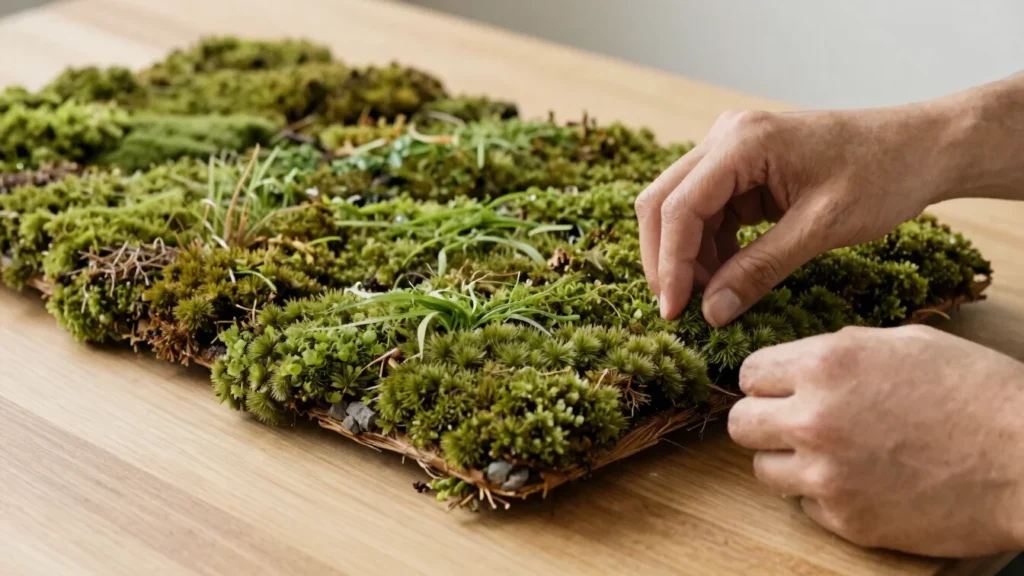
Many moss wall art designs combine two or more types to get the best of each. A common approach uses sheet moss as the base layer, cushion moss to create focal mounds, and reindeer moss to add color highlights. The result is a panel that has visual variety without feeling chaotic. The key is to plan the layout before mounting, so that each type of moss sits in a position that suits its texture and color.
Preserved moss is a forgiving material to work with, and the different types give you plenty of room to experiment. By understanding what each one offers, you can build a display that looks natural, stays beautiful for years, and fits the style of the room where it lives.
❧